
How Hunters Hall is Supporting a Cleaner Future Through Renewable Energy
Solar energy has reached a historic milestone across Europe, highlighting the growing importance of renewable energy in delivering cleaner, more resilient and more affordable electricity for future generations.
According to recent analysis, solar power generated a record of electricity across the EU providing 25% of all electricity used throughout June 2026. For the first time ever, solar became Europe’s largest single source of electricity, surpassing nuclear power (21%), gas (15%), wind (14%), hydropower (12%) and coal (8%). Just five years ago, solar accounted for only 10% of EU electricity generation, demonstrating the real pace of renewable energy growth.
The rapid deployment of solar technology is helping countries improve energy security, reduce dependence on fossil fuels and lower carbon emissions while protecting consumers from volatile energy markets.
These European achievements provide an important backdrop to the success of local renewable energy projects across the UK, including the solar PV installation at Hunter’s Hall Primary School.
The Hunter’s Hall project was on of the 48 funded schools through the GLA ‘greener schools’ funding and clearly demonstrates how schools can make a meaningful contribution to climate action while delivering practical benefits for pupils, inspiring the next generation, staff and the wider community. Through the generation of clean, renewable electricity on-site, the installation helps reduce the school’s reliance on grid electricity, lowers carbon emissions and supports long-term sustainability objectives.
Last February, M&C introduced pupils and teachers to the benefits of solar energy and the role it plays in reducing carbon emissions. The session highlighted the importance of sustainability and encouraged pupils to understand how renewable energy can help protect the environment for future generations. Mete Coban, Deputy Mayor of London for Environment and Energy, Nesil Caliskan MP, and other representatives from the Greater London Authority and the London Borough of Barking & Dagenham were presence reinforcing the importance of investing in renewable energy within schools and inspiring young people to become active participants in building a more sustainable future.
Since installation, the system has continued to perform strongly, with operational data showing that generation levels are exceeding original performance projections. This success highlights the value of accurate assessment, careful system design and long-term investment in sustainable infrastructure.
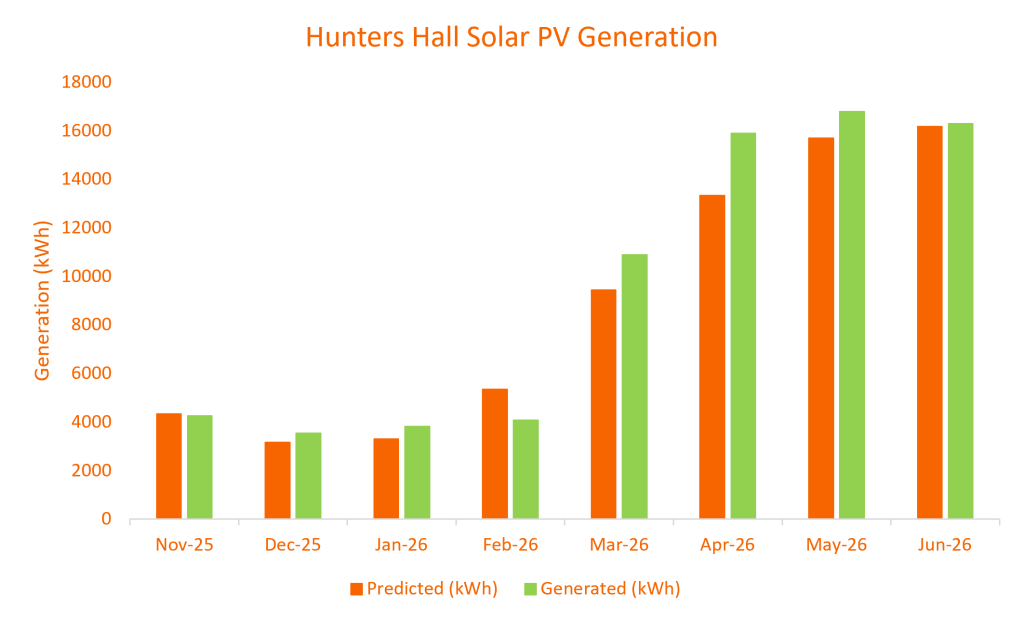
The predicted energy generation is based on computer software that uses historical weather data, including typical patterns of sunshine, cloud cover, and temperature, to predict how much electricity the solar PV system should produce. In reality, weather conditions vary from year to year. If a month has more cloudy days, heavier rainfall, or less sunshine than the historical average used by the software, the actual energy generation will be lower than the estimate. These differences are normal and are mainly due to natural variations in weather.
The project demonstrates how local action contributes to a much larger global transition. Across Europe, governments, communities and organisations are accelerating the adoption of renewable technologies in response to rising energy costs, increased demand for energy security and the need to tackle climate change. The success of solar generation across the EU shows that renewable energy is no longer an emerging technology – it is becoming a central part of modern energy systems.
The Results
Since installation in autumn 2025, the system has already delivered measurable results:
- £14,000 in total financial benefits realised to date (September 2025 – June 2026)
- Predicted annual financial benefit of £18,500
- Annual CO₂ reduction of 23,000 kg — replacing 37% of the school’s grid electricity
- Simple payback period of 7 years on the total project investment of £125,350
- Estimated lifetime financial benefit of over £450,000 over the 25+ year design life of the system
For Hunter’s Hall pupils, the solar installation provides more than just renewable electricity. Since September 2025, the Hunter’s Hall solar installation has already delivered significant financial benefits for the school. Between September 2025 and June 2026, the system generated £12,000 in electricity cost savings, demonstrating the value of investing in renewable energy infrastructure. These savings can help support the school’s long-term sustainability objectives while reducing reliance on grid electricity and protecting against future energy cost volatility.
As one of the largest solar installations in any London school, Hunter’s Hall Primary School stands as an excellent example of how local projects can contribute to wider environmental goals. By investing in clean energy today, the school is helping to build a more sustainable future for current and future generations.
If your school, trust or organisation is exploring ways to cut carbon, lower energy bills or invest in cleaner infrastructure, our team is here to help. Get in touch with Munday & Cramer to discuss how renewable energy could support your estate and your community’s future.
Get in touch:
Building Surveying, Energy & Sustainability, LBBD, London Schools, Project Management, Renewable Energy, Solar, sustainability